
- January 1, 2025
- Pandit Milind Guruji
- 0
Navratri 2026: Meaning, Rituals, Traditions, and Spiritual Significance
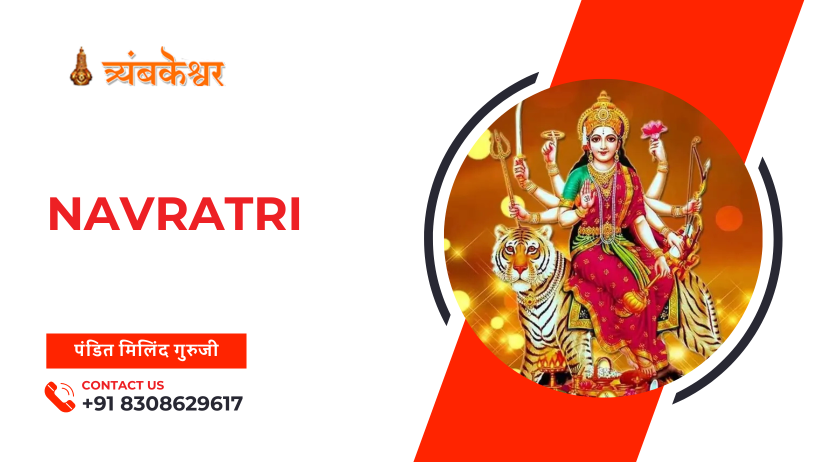
Navratri is one of the most vibrant and widely celebrated Hindu festivals. Dedicated to Goddess Durga and her nine divine forms, this festival spans nine nights and ten days of devotion, dance, fasting, and spiritual awakening. The word Navratri comes from Sanskrit—Nav meaning nine and Ratri meaning nights. Across India and beyond, Navratri holds immense cultural, religious, and spiritual importance.
In this blog, we will explore the deep meaning of Navratri, the rituals performed during these sacred nine days, its regional variations, and the inner significance it holds for devotees. Moreover, we will answer frequently asked questions and provide insights into why this festival continues to inspire millions worldwide.
The Meaning of Navratri
At its core, Navratri represents the triumph of good over evil. It symbolizes the victory of Goddess Durga, who destroyed the demon Mahishasura after a fierce battle that lasted nine nights and ten days. Each night of Navratri is devoted to one of her nine manifestations, collectively known as Navadurga.
Furthermore, Navratri is not only about external worship; it is also about inner transformation. The festival inspires devotees to cleanse their minds, conquer negativity, and strengthen their spiritual resolve.
The Nine Forms of Goddess Durga
Each day of Navratri is dedicated to one form of the Goddess. Let us briefly understand the significance of these nine goddesses:
Day 1 – Shailputri: Symbolizes purity and strength.
Day 2 – Brahmacharini: Represents devotion and spiritual enlightenment.
Day 3 – Chandraghanta: Embodies courage and grace.
Day 4 – Kushmanda: Known as the creator of the universe with her radiant smile.
Day 5 – Skandamata: Depicts motherly love and protection.
Day 6 – Katyayani: Associated with bravery and destruction of evil.
Day 7 – Kalaratri: Fierce form, remover of fear and darkness.
Day 8 – Mahagauri: Symbol of purity, peace, and serenity.
Day 9 – Siddhidatri: Bestows wisdom, knowledge, and supernatural powers.
Each form represents a step in spiritual evolution, guiding devotees from courage and strength to ultimate wisdom and liberation.
📅 Navratri 2026 Dates
| Navratri Type | Start Date | End Date | Notes |
|---|---|---|---|
| Gupt Navratri (Magh) | Mon, 19 Jan 2026 | Tue, 27 Jan 2026 | Spiritual/secretive Navratri observed by many devotees and sadhaks. |
| Chaitra Navratri (Spring) | Thu, 19 Mar 2026 | Fri, 27 Mar 2026 | First day called Ghatsthapana/Pratipada. |
| Sharadiya Navratri (Autumn) | Sun, 11 Oct 2026 | Tue, 20 Oct 2026 | Most widely celebrated with Vijayadashami/Dussehra on 20 Oct. |
📅 Magh Gupt Navratri 2026 Dates (India)
Start: Monday, 19 January 2026
End: Tuesday, 27 January 2026
Duration: 9 days
Gupt Navratri begins on Magh Shukla Pratipada and ends on Magh Shukla Navami.
🪔 Day-wise Dates (2026)
| Day | Tithi | Date (2026) |
|---|---|---|
| Day 1 | Pratipada | 19 January (Mon) |
| Day 2 | Dwitiya | 20 January (Tue) |
| Day 3 | Tritiya | 21 January (Wed) |
| Day 4 | Chaturthi | 22 January (Thu) |
| Day 5 | Panchami | 23 January (Fri) |
| Day 6 | Shashthi | 24 January (Sat) |
| Day 7 | Saptami | 25 January (Sun) |
| Day 8 | Ashtami | 26 January (Mon) |
| Day 9 | Navami | 27 January (Tue) |
📅 Chaitra Navratri 2026 Dates (India)
Start: Thursday, 19 March 2026
End: Friday, 27 March 2026
Duration: 9 days
Chaitra Navratri begins on Chaitra Shukla Pratipada and concludes on Navami, which is celebrated as Ram Navami.
🪔 Day-wise Dates (2026)
| Day | Tithi | Date (2026) | Goddess Form (Navadurga) |
|---|---|---|---|
| Day 1 | Pratipada | 19 Mar (Thu) | Maa Shailputri |
| Day 2 | Dwitiya | 20 Mar (Fri) | Maa Brahmacharini |
| Day 3 | Tritiya | 21 Mar (Sat) | Maa Chandraghanta |
| Day 4 | Chaturthi | 22 Mar (Sun) | Maa Kushmanda |
| Day 5 | Panchami | 23 Mar (Mon) | Maa Skandamata |
| Day 6 | Shashthi | 24 Mar (Tue) | Maa Katyayani |
| Day 7 | Saptami | 25 Mar (Wed) | Maa Kalaratri |
| Day 8 | Ashtami | 26 Mar (Thu) | Maa Mahagauri |
| Day 9 | Navami (Ram Navami) | 27 Mar (Fri) | Maa Siddhidatri |
📅 Sharadiya Navratri 2026 Dates
| Day | Date (2026) | Festival / Significance |
|---|---|---|
| Day 1 (Pratipada) | Sun, 11 Oct 2026 | Navratri begins (Ghatasthapana / Kalash Sthapana) |
| Day 2 (Dwitiya) | Mon, 12 Oct 2026 | Second day of Navratri |
| Day 3 (Tritiya) | Tue, 13 Oct 2026 | Third day |
| Day 4 (Chaturthi) | Wed, 14 Oct 2026 | Fourth day |
| Day 5 (Panchami) | Thu, 15 Oct 2026 | Fifth day |
| Day 6 (Shashthi) | Fri, 16 Oct 2026 | Sixth day |
| Day 7 (Saptami) | Sat, 17 Oct 2026 | Seventh day |
| Day 8 (Ashtami) | Sun, 18 Oct 2026 | Eighth day |
| Day 9 (Navami) | Mon, 19 Oct 2026 | Ninth day |
| Vijayadashami / Dussehra | Tue, 20 Oct 2026 | Festival culmination (10th day) |
Rituals of Navratri
Fasting and Devotion
Fasting is one of the central rituals of Navratri. Devotees observe fasts in different ways—some eat fruits and milk, while others consume only one meal a day with specific ingredients like sabudana, kuttu flour, and potatoes. The fast is not just about abstaining from food but about purifying the mind and body.
Ghatasthapana
The festival begins with Ghatasthapana, a sacred ritual where a pot (kalash) is installed as a symbol of Goddess Durga’s presence. This marks the beginning of the nine days of worship.
Daily Prayers and Aarti
Devotees perform daily prayers, chant mantras, and conduct aarti to honor the goddess. Special offerings such as flowers, sweets, and fruits are made.
Kanya Pujan
On the eighth or ninth day, young girls (symbolizing the nine forms of Durga) are worshipped. They are offered food, gifts, and blessings, acknowledging the divine feminine energy.
Regional Celebrations of Navratri
Navratri is celebrated differently across India, reflecting the country’s rich cultural diversity.
Gujarat: Famous for Garba and Dandiya Raas, where devotees dance in circles around a lamp or idol of Durga.
West Bengal: Known as Durga Puja, it involves elaborate pandals, artistic idols, and grand celebrations.
Maharashtra: Families worship Goddess Durga at home and organize community aartis.
Tamil Nadu: The festival is marked by Bommai Kolu, where dolls and figurines are displayed in homes.
Himachal Pradesh: Celebrated as Kullu Dussehra, it extends beyond Navratri, focusing on Lord Raghunath.
Punjab: Devotees observe fasts and gather for Jagran and Kirtan at night.
Thus, while the essence of Navratri remains the same, its expressions vary beautifully across regions.
The Spiritual Significance of Navratri
Beyond rituals and festivities, Navratri carries profound spiritual meaning. It is believed that the nine days symbolize the inner battle between good and evil within every human being. Just as Goddess Durga destroyed demons, devotees are encouraged to overcome negative tendencies like anger, greed, and ego.
Navratri is also a time of self-reflection, meditation, and rejuvenation. It provides an opportunity to connect with divine energy, develop discipline through fasting, and strengthen faith.
Importance of Colors in Navratri
Each day of Navratri is associated with a specific color that holds symbolic meaning:
Day 1: Yellow – Energy and happiness
Day 2: Green – Growth and harmony
Day 3: Grey – Balance and protection
Day 4: Orange – Courage and enthusiasm
Day 5: White – Purity and peace
Day 6: Red – Strength and passion
Day 7: Royal Blue – Wealth and prosperity
Day 8: Pink – Love and kindness
Day 9: Purple – Spirituality and wisdom
Wearing these colors is believed to attract positive energy and blessings from the Goddess.
Navratri and Dussehra Connection
Navratri culminates with Vijayadashami or Dussehra, symbolizing the victory of Lord Rama over Ravana. Thus, while the nine nights are dedicated to Goddess Durga, the tenth day signifies the triumph of righteousness in broader Hindu mythology.
This connection highlights the universal theme of good prevailing over evil—a timeless message that continues to inspire generations.
Modern-Day Celebrations of Navratri
Today, Navratri is celebrated not only in temples and homes but also in community spaces, auditoriums, and even globally. Indians abroad organize Garba nights, Durga Puja pandals, and cultural programs. Social media and digital platforms further amplify the festive spirit by sharing devotional songs, live aarti sessions, and cultural events.
Frequently Asked Questions About Navratri
1. Why do we celebrate Navratri?
Navratri is celebrated to honor Goddess Durga’s victory over Mahishasura, symbolizing the triumph of good over evil.
2. Can everyone observe Navratri fast?
Yes, but it depends on health and personal choice. Pregnant women, elderly individuals, and people with health conditions may follow modified fasts.
3. What food is allowed during Navratri fasts?
Devotees eat fruits, milk, nuts, and specific grains like kuttu (buckwheat) and singhara (water chestnut). Onion, garlic, wheat, and rice are generally avoided.
4. Is Navratri celebrated only in India?
No, it is celebrated worldwide by the Indian diaspora, particularly in countries like the USA, UK, Canada, and Australia.
5. What is the difference between Sharad Navratri and Chaitra Navratri?
Sharad Navratri occurs in September–October, while Chaitra Navratri falls in March–April. Both celebrate Goddess Durga but in different seasonal contexts.
Conclusion
Navratri is not just a festival; it is a journey of faith, devotion, and inner growth. It teaches us resilience, courage, and the importance of overcoming negativity in life. With its vibrant rituals, cultural expressions, and spiritual depth, Navratri remains one of the most cherished festivals of Hindu tradition.
As you participate in this festival, whether through fasting, prayers, Garba, or Durga Puja, remember that the true essence of Navratri lies in invoking the goddess within and walking the path of righteousness.