
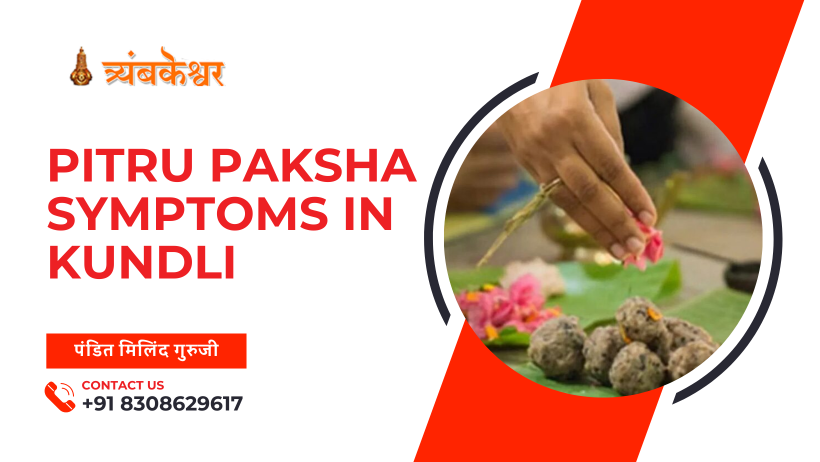
- January 1, 2025
- Pandit Milind Guruji
- 0
Pitru Paksha Symptoms in Kundli – Signs of Pitru Dosha
Pitru Paksha is a sacred period in Hinduism dedicated to honoring ancestors through rituals like Shradh, Tarpan, and Pind Daan. According to Vedic astrology, if certain planetary placements in a birth chart (Kundli) indicate unresolved ancestral karma, it is termed Pitru Dosha. This karmic debt often manifests as struggles, delays, or repeated problems in life until specific remedies are performed.
In this guide, we will explore how to identify Pitru Dosha through Kundli symptoms, its astrological significance, and how Pitru Paksha plays a crucial role in resolving it.
1. Understanding Pitru Dosha in Astrology
In Vedic astrology, Pitru Dosha refers to karmic imbalances created due to unfulfilled duties towards one’s ancestors or because of their unsettled souls. This dosha is not merely a superstition—it is deeply rooted in the belief that ancestral blessings are vital for prosperity, peace, and spiritual growth.
From an astrological perspective, Pitru Dosha can occur due to:
Affliction of the Sun (representing father/ancestors)
Malefic placement of Rahu and Ketu
Weak ninth house (house of Dharma and ancestors)
Unfavorable positioning of Saturn (karma significator)
When these align unfavorably, they create obstacles in personal, professional, and family life.
2. How Pitru Paksha Connects to Pitru Dosha
Pitru Paksha (a 16-day period) is the most auspicious time for performing ancestral rites. During this phase, it is believed that the spirits of ancestors visit Earth to bless their descendants—provided the rituals are performed correctly.
For people with Pitru Dosha in Kundli, Pitru Paksha becomes a golden opportunity to:
Perform Shradh and Tarpan to free the ancestors
Seek forgiveness for past karmic debts
Receive blessings for harmony, success, and moksha
If ignored, the negative influence of Pitru Dosha may intensify, as the ancestral dissatisfaction remains unresolved.
3. Astrological Signs of Pitru Dosha in Kundli
You can identify Pitru Dosha in a birth chart by examining specific combinations and placements.
a) Sun Afflicted by Malefic Planets
The Sun signifies fatherhood, ancestors, and vitality. If Sun is placed with Rahu, Ketu, or Saturn in malefic houses, Pitru Dosha is indicated.
b) Weak or Malefic Ninth House
The ninth house represents Dharma, spirituality, and forefathers. A debilitated ninth house lord or the presence of malefic planets here points to ancestral karmic debt.
c) Rahu in Ninth House or Conjunction with Sun/Moon
Rahu’s placement in the ninth house or its association with Sun/Moon can cause severe disruptions in receiving ancestral blessings.
d) Ketu in Lagna or Ninth House
Ketu often symbolizes detachment and past karmic patterns. Its unfavorable placement can indicate incomplete ancestral rites.
e) Saturn’s Affliction in Key Houses
Saturn in the first, ninth, or tenth house—especially when retrograde or conjunct with malefics—can show unfulfilled karmic duties towards ancestors.
4. Life Symptoms of Pitru Dosha
Astrological patterns manifest as real-life difficulties. Common symptoms of Pitru Dosha include:
Delay in Marriage – Despite best efforts, marriage proposals face repeated rejections or cancellations.
Childbirth Issues – Difficulty in conceiving or repeated miscarriages.
Financial Struggles – Persistent instability, unexpected losses, or debts.
Family Disputes – Constant misunderstandings, lack of unity among family members.
Health Problems – Chronic illnesses that are hard to diagnose or cure.
Repetitive Failures – Projects collapse at the last moment, or efforts go unrewarded.
Unfulfilled Desires – Life feels stuck, with no visible growth despite hard work.
5. Spiritual Symptoms During Pitru Paksha
During Pitru Paksha, people with Pitru Dosha may notice unusual occurrences:
Repeated dreams of deceased relatives
Sudden emotional heaviness or feeling of longing
Seeing crows, cows, or dogs frequently around the home
Food offerings left outside disappearing quickly
Sudden urge to perform Shradh or visit pilgrimage sites
These are believed to be subtle messages from ancestors seeking liberation.
6. Common Causes of Pitru Dosha
The causes can be spiritual, karmic, or ritual-based:
Ancestors who passed away in unnatural circumstances
Failure to perform annual Shradh
Disrespect or negligence towards parents and elders
Forgotten ancestral lineage and traditions
Broken promises made to forefathers
Past-life karmas involving harm to others
7. How to Confirm Pitru Dosha in Your Kundli
If you suspect Pitru Dosha, it is advisable to:
Consult an experienced Vedic astrologer for chart analysis
Check for Rahu-Ketu afflictions and Sun’s condition
Evaluate the ninth house and its lord’s dignity
Observe life events and patterns aligning with Pitru Dosha symptoms
8. Pitru Paksha Remedies for Pitru Dosha
Performing remedies during Pitru Paksha amplifies their impact. Key remedies include:
a) Shradh & Tarpan
Offer water, black sesame seeds, and rice to ancestors at sacred rivers or home.
b) Feeding the Needy
Feed Brahmins, poor people, and animals—especially cows, dogs, and crows.
c) Planting Trees
Planting a Peepal or Banyan tree is considered highly auspicious for releasing karmic debts.
d) Charity in Ancestors’ Name
Donate clothes, grains, and other essentials in memory of forefathers.
e) Reciting Mantras
Chanting Maha Mrityunjaya Mantra and Om Namo Bhagavate Vasudevaya helps free the soul.
9. Pitru Dosha and Its Link to Moksha
Resolving Pitru Dosha not only removes obstacles but also helps the ancestors attain moksha (liberation). This ensures:
Peace in the family
Improved fortune and harmony
Spiritual growth for both descendants and ancestors
10. FAQs – Pitru Paksha Symptoms in Kundli
Q1. Can Pitru Dosha be removed permanently?
Yes, with proper rituals, mantras, and charity, Pitru Dosha can be significantly reduced or removed.
Q2. Is Pitru Dosha hereditary?
It can pass through generations until resolved through spiritual remedies.
Q3. Can women perform Pitru Paksha rituals?
Yes, if no male member is available, women can perform Shradh with complete devotion.
Q4. Which day of Pitru Paksha is most powerful for remedies?
Mahalaya Amavasya (last day) is considered the most effective for Dosha removal.
Q5. Does Pitru Dosha always cause problems?
Not necessarily. Its impact depends on severity in the Kundli and personal karma.
Conclusion
Recognizing Pitru Paksha symptoms in Kundli is the first step towards resolving ancestral karmic debts. By performing the right rituals, mantras, and acts of charity during Pitru Paksha, you not only bring peace to your ancestors but also invite blessings, success, and harmony into your own life.