
- January 1, 2025
- Pandit Milind Guruji
- 0
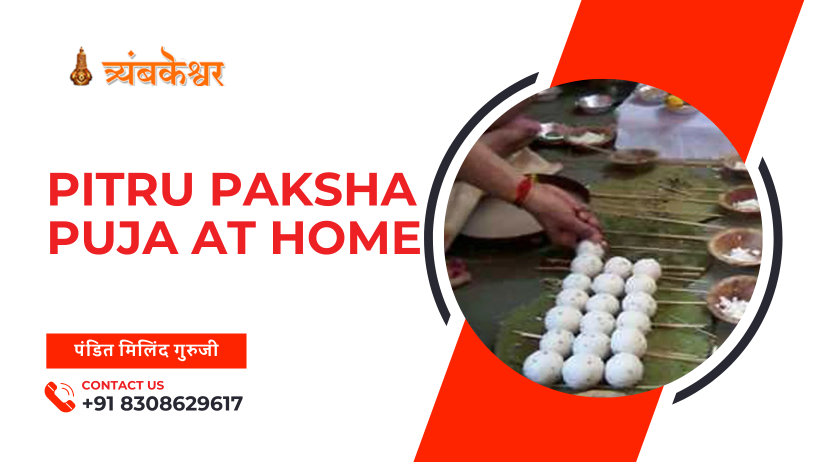
Pitru Paksha Puja at Home – Complete Shradh Ritual Guide
Honoring our ancestors is one of the most important duties in Hindu tradition. Pitru Paksha—a 16-day period dedicated to paying respects to departed souls—holds great spiritual significance. While many people visit sacred places like Gaya, Trimbakeshwar, or Prayagraj to perform the rituals, it is also possible to conduct Pitru Paksha Puja at home with full devotion and correct procedures.
This complete guide will help you understand the meaning, significance, and step-by-step rituals of Shradh at home, ensuring you invite blessings from your ancestors for peace, prosperity, and protection.
1. Understanding Pitru Paksha – A Sacred Period of Ancestral Worship
Pitru Paksha, also known as Shradh Paksha, occurs during the Krishna Paksha (waning moon fortnight) of the Hindu month of Bhadrapada or Ashwin. According to Hindu scriptures, during this period, the souls of ancestors visit the earth to bless their descendants.
The rituals performed during Pitru Paksha are believed to:
Bring peace to the souls of ancestors.
Remove ancestral curses (Pitru Dosh).
Attract blessings for health, wealth, and happiness.
2. Why Perform Pitru Paksha Puja at Home?
While visiting sacred pilgrimage sites is highly recommended, performing the puja at home has its own significance.
Convenience – Ideal for those who cannot travel due to health, distance, or financial constraints.
Personal Connection – You perform the rituals in your own space, making it more intimate and heartfelt.
Daily Offerings – You can offer tarpan, food, and prayers regularly during the 16 days.
Key Point: Performing Shradh at home requires sincerity, correct mantras, and following the right vidhi (procedure) as per scriptures.
3. Essential Rules Before Performing Pitru Paksha Puja at Home
To ensure the puja is effective, follow these traditional guidelines:
Purity of Mind and Body – Bathe before starting the rituals. Wear clean, preferably white or light-colored clothes.
Fasting and Simplicity – Avoid non-vegetarian food, alcohol, and onion-garlic during Pitru Paksha.
Shradh Date Selection – Perform the puja on the tithi (lunar day) of the ancestor’s death.
Brahmin Feeding – Offer food and dakshina to Brahmins or needy persons after the puja.
Family Participation – The eldest male member usually leads the rituals, but women can also perform them if no male member is present.
4. Items Required for Pitru Paksha Puja at Home
Prepare all the necessary items in advance:
Black sesame seeds (til).
Kusha grass (darbha).
Water in a copper or brass pot (kalash).
Flowers (preferably yellow or white).
Rice mixed with black sesame (pind).
Cow milk, honey, and ghee.
Incense sticks (agarbatti) and a lamp (diya).
Seasonal fruits and vegetarian food.
Photograph or symbolic representation of the ancestors.
5. Step-by-Step Pitru Paksha Puja Vidhi at Home
Step 1 – Purification of Space
Clean the puja area thoroughly.
Sprinkle Ganga Jal or clean water with tulsi leaves to purify the surroundings.
Step 2 – Sankalp (Resolution)
Sit facing south (direction of ancestors).
Hold water in your right hand with some sesame seeds and kusha grass.
Take a vow to perform the Shradh for the peace of your ancestors.
Step 3 – Tarpan Ritual
Pour water mixed with black sesame seeds through your fingers while chanting Pitru Tarpan Mantras.
Offer the tarpan thrice for father’s lineage and thrice for mother’s lineage.
Step 4 – Pind Daan
Prepare pind (rice balls mixed with black sesame and ghee).
Offer them on a banana leaf or clean plate.
Chant mantras while offering pinds to each ancestor you remember.
Step 5 – Food Offering (Bhojan)
Cook a simple satvik meal without onion or garlic.
Place the food in front of the ancestor’s photograph or symbolic area.
Step 6 – Brahmin or Needy Feeding
Offer food, fruits, and dakshina to a Brahmin, priest, or needy person.
This act is considered the most auspicious part of the ritual.
Step 7 – Concluding Prayers
Light incense and a lamp.
Offer flowers, chant prayers, and seek blessings from your ancestors.
6. Powerful Mantras for Pitru Paksha Puja at Home
Reciting mantras during the puja enhances its effectiveness. Some important ones include:
Pitru Tarpan Mantra:
“Om Pitrubhyo Swadha, Om Pitrubhyo Namah”
Shradh Mantra:
“Om Namo Bhagavate Vasudevaya”
Peace Mantra:
“Om Shanti Shanti Shanti”
Chant these mantras with devotion and clarity.
7. Common Mistakes to Avoid During Pitru Paksha Puja at Home
Wrong Direction – Always face south while performing Shradh.
Using Stale Food – Freshly cooked food is essential for offerings.
Skipping Tarpan – Tarpan is the heart of the ritual; never skip it.
Casual Attitude – Perform the puja with utmost devotion and respect.
8. Spiritual and Practical Benefits of Performing Shradh at Home
Ancestral Blessings – Brings protection, prosperity, and harmony.
Removal of Pitru Dosh – Helps in resolving delays in marriage, childbirth, or career growth.
Spiritual Peace – Brings inner satisfaction and mental clarity.
Family Unity – Strengthens emotional bonds among family members.
9. Frequently Asked Questions (FAQs)
Q1: Can women perform Pitru Paksha Puja at home?
Yes, women can perform Shradh in the absence of male members.
Q2: What is the best time of day to perform the puja?
It is usually performed in the morning before noon.
Q3: Can I perform Pitru Paksha rituals without a priest?
Yes, but it is important to follow the correct vidhi and chant proper mantras.
Q4: Can Shradh be done for someone who passed away recently?
If the first-year rituals (Sapindikaran) are completed, it can be performed.
Q5: What should be avoided during Pitru Paksha?
Avoid non-veg food, alcohol, unnecessary celebrations, and harming living beings.
10. Final Thoughts
Pitru Paksha Puja at home is not just a ritual—it is a bridge connecting the living with the departed. By following the correct vidhi, chanting powerful mantras, and offering sincere prayers, you invite divine blessings, remove karmic obstacles, and honor the sacred bond with your ancestors.
In the fast-paced modern world, this age-old tradition reminds us of the roots from which we come and the unseen hands that continue to bless our journey. Whether you perform the rituals at a holy place or within the sacred space of your home, the key lies in devotion, gratitude, and sincerity.